You may have read the news that Platform Computing has signed a definitive agreement to be acquired by IBM and you may wonder why. I’d like to share with you our thinking at Platform and what our relevance is to you and the dramatic evolution of enterprise computing. Even though not an old man yet and usually too busy doing stuff, for once I will try to look at the past, present and future.
After the first two generations of IT architecture, centralized mainframe and networked client/server, IT has finally advanced to its third generation architecture of (true) distributed computing. An unlimited number of resource components, such as servers, storage devices and interconnects, are glued together by a layer of management software to form a logically centralized system – call it virtual mainframe, cluster, grid, cloud, or whatever you want. The users don’t really care where the “server” is, as long as they can access application services – probably over a wireless connection. Oh, they also want those services to be inexpensive and preferably on a pay-for-use basis. Like a master athlete making the most challenging routines look so easy, such a simple computing model actually calls for a sophisticated distributed computing architecture. Users’ priorities and budgets differ, apps’ resource demands fluctuate, and the types of hardware they need vary. So, the management software for such a system needs to be able to integrate whatever resources, morph them dynamically to fit each app’s needs, arbitrate amongst competing apps’ demands, and deliver IT as a service as cost effectively as possible. This idea gave birth to commodity clusters, enterprise grids, and now cloud. This has been the vision of Platform Computing since we began 19 years ago.

Just as client/server took 20 years to mature into the mainstream, clusters and grids have taken 20 years, and cloud for general business apps is still just emerging. Two areas have been leading the way: HPC/technical computing followed by Internet services. It’s no accident that Platform Computing was founded in 1992 by Jingwen Wang and I, two renegade Computer Science professors with no business experience or even interest. We wanted to translate ‘80s distributed operating systems research into cluster and grid management products. That’s when the lowly x86 servers were becoming powerful enough to do the big proprietary servers’ job, especially if a bunch of them banded together to form a cluster, and later on an enterprise grid with multiple clusters. One system for all apps, shared with order. Initially, we talked to all the major systems vendors to transfer university research results to them, but there was no taker. So, we decided to practice what we preached. We have been growing and profitable all these 19 years with no external funding. Using clusters and grids, we replaced a supercomputer at Pratt & Whitney to run 10 times more Boeing 777 jet engine simulations, and we supported CERN to process insane amounts of data looking for God’s Particle. While the propeller heads were having fun, enterprises in financial services, manufacturing, pharmaceuticals, oil & gas, electronics, and the entertainment industries turned to these low cost, massively parallel systems to design better products and devise more clever services. To make money, they compute. To out-compete, they out-compute.
The second area adopting clusters, grids and cloud, following HPC/technical computing, is Internet services. By the early 2000s, business at Amazon and Google was going gangbusters, yet they wanted a more cost effective and infinitely scalable system versus buying expensive proprietary systems. They developed their own management software to lash together x86 servers running Linux. They even developed their own middleware, such as MapReduce for processing massive amounts of “unstructured” data.

This brings us to the present day and the pending acquisition of Platform by IBM. Over the last 19 years, Platform has developed a set of distributed middleware and workload and resource management software to run apps on clusters and grids. To keep leading our customers forward, we have extended our software to private cloud management for more types of apps, including Web services, MapReduce and all kinds of analytics. We want to do for enterprises what Google did for themselves, by delivering the management software that glues together whatever hardware resources and applications these enterprises use for production. In other words, Google computing for the enterprise. Platform Computing.

So, it’s all about apps (or IaaS J). Old apps going distributed, new apps built as distributed. Platform’s 19 years of profitable growth has been fueled by delivering value to more and more types of apps for more and more customers. Platform has continued to invest in product innovation and customer services.
The foundation of this acquisition is the ever expanding technical computing market going mainstream. IDC has been tracking this technical computing systems market segment at $14B, or 20% of the overall systems market. It is growing at 8%/year, or twice the growth rate of servers overall. Both IDC and users also point out that the biggest bottleneck to wider adoption is the complexity of clusters and grids, and thus the escalating needs for middleware and management software to hide all the moving parts and just deliver IT as a service. You see, it’s well worth paying a little for management software to get the most out of your hardware. Platform has a single mission: to rapidly deliver effective distributed computing management software to the enterprise. On our own, especially in the early days when going was tough, we have been doing a pretty good job for some enterprises in some parts of the world. But, we are only 536 heroes. Combined with IBM, we can get to all the enterprises worldwide. We have helped our customers to run their businesses better, faster, cheaper. After 19 years, IBM convinced us that there can also be a “better, faster, cheaper” way to help more customers and to grow our business. As they say, it’s all about leverage and scale.
We all have to grow up, including the propeller heads. Some visionary users will continue to buy the pieces of hardware and software to lash together their own systems. Most enterprises expect to get whole systems ready to run their apps, but they don’t want to be tied down to proprietary systems and vendors. They want choices. Heterogeneity is the norm rather than exception. Platform’s management software delivers the capabilities they want while enabling their choices of hardware, OS and apps.
IBM’s Systems and Technology Group wants to remain a systems business, not a hardware business nor a parts business. Therefore, IBM’s renewed emphasis is on systems software in its own right. IBM and Platform, the two complementary market leaders in technical computing systems and management software respectively, are coming together to provide overall market leadership and help customers to do more cost effective computing. In IBM speak, it’s smarter systems for smarter computing enabling a Smarter Planet. Not smarter people. Just normal people doing smarter things supported by smarter systems.
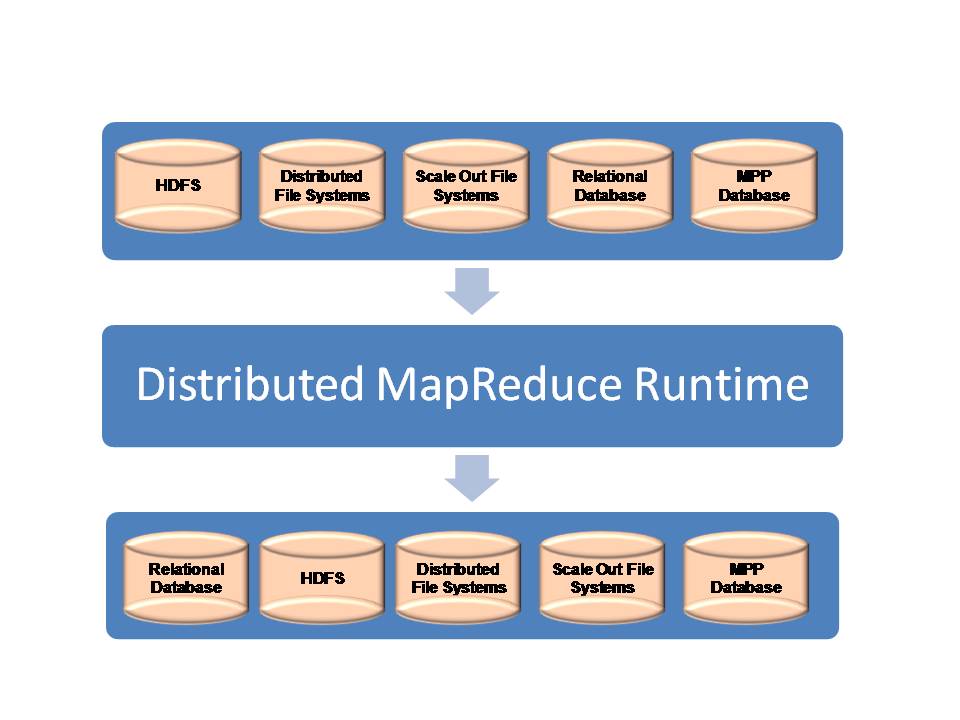
Now that I hopefully have you convinced that we at Platform are not nuts coming together with IBM, we hope to show you that Platform’s products and technologies have legs to go beyond clusters and grids. After all, HPC/technical computing has always been a fountainhead of new technology innovation feeding into the mainstream. Distributed computing as a new IT architecture is one such example. Our newer products for private cloud management, Platform ISF, and for unstructured data analytics, Platform MapReduce, are showing some early promise, even awards, followed by revenue.
IBM expects Platform to operate as a coherent business unit within its Systems and Technology Group. We got some promises from folks at IBM. We will accelerate our investments and growth. We will deliver on our product roadmaps. We will continue to provide our industry-best support and services. We will work even harder to add value to our partners, including IBM’s competitors. We want to make new friends while keeping the old, for one is silver while the other is gold. We might even get to keep our brand name. After all, distributed computing needs a platform, and there is only one Platform Computing. We are an optimistic bunch. We want to deliver to you the best of both worlds – you know what I mean. Give us a chance to show you what we can do for you tomorrow. Our customers and partners have journeyed with Platform all these years and have not regretted it. We are grateful to them eternally.
So, with a pile of approvals, Platform Computing as a standalone company may come to an end, but the journey continues to clusters, grids, clouds, or whatever you want to call the future. The prelude is drawing to a close, and the symphony is about to start. We want you to join us at this show.
Thank you for listening.